When Automated Infusion Billing Leaves Revenue on the Table Switch to a Hybrid RCM Model
Infusion practices need skilled staff to catch denials automation misses.
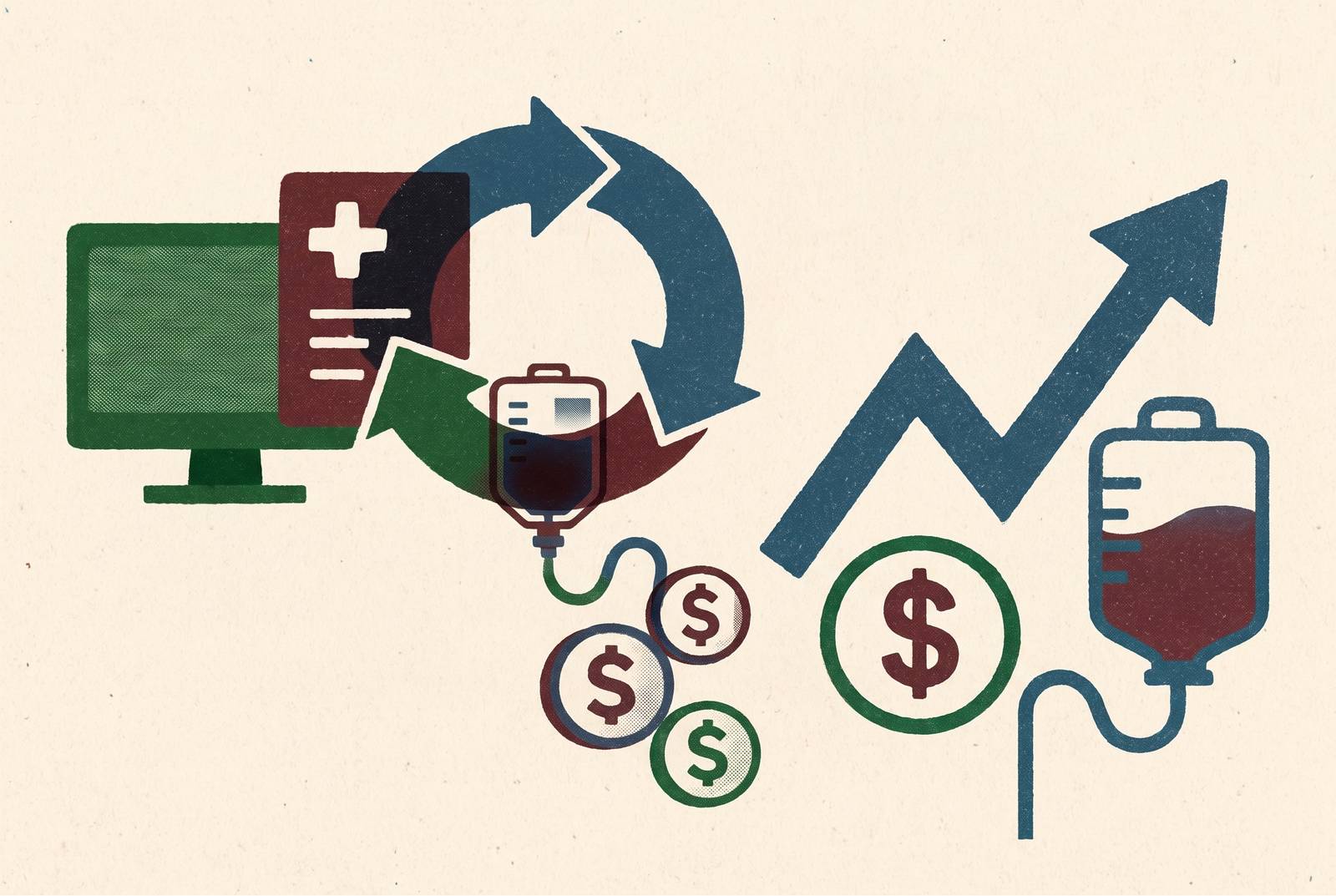
For buy-and-bill practices, an infusion-only RCM platform needs to pair billing software with experienced operators. Dealing with denials in 2026 takes clinical and payer-specific judgment beyond what static rules can do. When automated infusion billing leaves revenue on the table, a hybrid RCM model addresses the gap by using software for repeatable checks and people for the decisions that determine reimbursement.
Why the 2026 infusion denial environment is structurally different from prior years
Payers are changing how they review, deny, and recover payments. Kodiak Solutions’ March 2026 report found that Medicare Advantage initial denial rates are more than double those of traditional Medicare and that commercial payer denials are the leading source of net revenue leakage. For most specialty practices, both make up a growing share of their payer mixes. That makes the change in payer behavior a growing financial exposure rather than a problem confined to a small part of the billing book.
The Sift Healthcare Fourth Annual Denials Insights Report from February 2026 identifies a structural shift in where that exposure appears. Denial activity is moving upstream and fragmenting across workflows as payers expand AI-assisted adjudication and policy enforcement. Automated takebacks and post-payment recoupments are also growing. A claim can pass submission checks and still be at risk of going unpaid. A payer may keep reviewing a claim even after the payment is posted.
Mid-year NCCI edits and payer-specific policy changes add another moving part. A rule that fit a claim earlier in the year may no longer fit by the next treatment. The financial damage comes when those changes fail to reach the workflows that depend on them. Knowing which rule changed, which payer enforces it, and when an exception applies requires judgment beyond executing the rule already stored in a system.
Why infusion claims face layered denial risk that general billing automation was not designed for
Infusion adds the cost of drugs to these changing payer rules, a burden that ordinary claim processing does not account for. In buy-and-bill, the practice carries the drug acquisition cost while it waits for reimbursement. A denied claim leaves that cost with the practice. At the cost levels common in biologics, a single denied encounter can become a cash-flow emergency. The claim’s status matters because money has already gone out.
A single J-code unit-count error on a high-dose biologic infusion can produce a significant underpayment. If the same mistake repeats across a busy practice, the losses compound. Drug waste documentation and JW modifier usage make the calculation harder still. Billing the administered dose rather than the ordered dose, while capturing waste correctly, requires understanding the drug, the payer, and the administered record.
UHC generates markedly more modifier-related denials than BCBS, while BCBS generates markedly more medical necessity denials. Those patterns call for different appeal strategies. A modifier dispute and a question about clinical need are not interchangeable billing problems. Standard automation that applies one rule set to a payer-specific, drug-specific, and dose-specific claim faces a structural mismatch.
How prior authorization failures become the infusion revenue cycle's most expensive breakage point
Prior authorization is where that mismatch can become hardest to repair. An authorization failure begins before claim submission, often while treatment is being scheduled or benefits are being reviewed. By the time it appears as a denial, the practice may already have delivered a drug without valid approval. The billing team is then trying to recover payment for an operational decision made days or weeks earlier. That is why authorization belongs at the center of financial control.
Recurring therapy makes the timing especially unforgiving. An original authorization may cover a fixed number of sessions, while the treatment course continues beyond them. If re-authorization is not submitted on time, later sessions take place without valid authorization on file. The eventual denial looks like a claim problem, but its cause was an earlier lifecycle gap.
The requirements themselves can also change during the course of care. Payers update authorization lists throughout the year, often without notifying infusion centers. A drug or code that needed no authorization last quarter may need one now. Expanded requirement lists, AI-assisted adjudication, and shortened appeal windows make a stale checklist more dangerous. Monitoring an expiration date alone does not establish that the current treatment still meets the payer’s approval requirements.
The NAIC’s December 2025 white paper recommended prohibiting retroactive denials for preauthorized care. It also recommended keeping authorizations valid for at least one year irrespective of dose changes and, for patients with chronic conditions, for the duration of treatment. Those recommendations recognize authorization instability as a systemic problem, but they are not a substitute for current controls. Authorization management must begin before treatment and follow the full course of care. Automation can chase a denial, but it cannot retroactively supply missing authorization, which is precisely the upstream failure a hybrid model must prevent.
How underpayments hide in infusion remittances where automation stops looking
A denial at least shows that a claim has gone unpaid. Underpayments can disappear into a workflow that treats any payment as completion. A J-code claim paid at the wrong unit count, or against a stale contracted rate, may post as paid and leave the queue without an alert. Automation fails here not by rejecting something incorrectly, but by accepting it incorrectly.
Medicare Part B reimburses most physician-administered drugs at a percentage above ASP, recalculated quarterly. That makes a current rate essential to deciding whether a payment is right. Commercial payments also need to be checked against the contracted rate that applies. A payment amount alone cannot show whether the practice received what it was owed. Posting software needs an up-to-date rate table for each contract and a check of each line to spot the shortfall.
Drug payments need regular audits against expected reimbursement, with underpayments appealed promptly. Software can support that comparison, but discrepancies still require review before an incorrect payment becomes final. This changes what accounts receivable management must cover. It cannot focus only on unpaid claims while treating paid-but-short claims as resolved.
What separates high-performing infusion organizations from those trapped in denial cycles
The distinction is whether the operation is built around getting a claim out or getting the correct reimbursement in. High-performing infusion organizations organize their work around the latter. That means a payer update has to reach every part of the process affected by it. Intake, benefits verification, authorization, clinical documentation, and billing cannot each operate from a different version of the requirement. A correct rule in one department does little good if the next department still follows the old one.
Consider a new payer requirement for a high-cost biologic. An update may never spread consistently through the treatment and billing workflow. That inconsistency can produce dozens of quietly delayed claims. Preventing the delay requires translating the policy into the actual checks and decisions people make.
Authorization becomes revenue protection in that operating model. It is managed before treatment and monitored throughout the treatment lifecycle. Someone who knows infusion has to judge whether a clinical note supports medical necessity and whether the billed units match the administered dose. Those decisions protect payment before a denial queue has anything to process.
Accounts receivable work then becomes more than a way to clear old balances. Denials and payment discrepancies reveal where earlier controls failed and where the next claim faces the same risk. Some claims need an immediate appeal, while others also demand an upstream correction before the next submission. Treating both as generic follow-up misses that distinction. What separates stronger operations is not more automation, but people making the right calls at the right moments in the workflow.
What a hybrid RCM model actually does that automation alone cannot
A hybrid RCM model gives software the repeatable work and experienced operators the decisions that require context. Automation does the work of real-time eligibility verification, claims scrubbing against current NCCI edit tables, and authorization-to-claim matching before a claim is sent, and it sends AR aging alerts. Those are tasks where speed and consistent rule execution have clear value. Operators work through questions left open by those checks, such as whether the clinical language meets the payer’s current medical necessity criteria. The split is between processing information and deciding what it means for payment.
The authorization lifecycle shows how the two parts fit together. Software tracks expiration dates and triggers re-authorization workflows on schedule. An operator then reviews the submission against current payer requirements and the patient’s treatment plan, catching dose or frequency changes that require updated approval. That operator also escalates peer-to-peer requests within the payer’s compressed review windows. In infusion-only platforms such as Ruby RCM, proactive authorization monitoring and re-authorization triggers are built into the workflow to catch lifecycle gaps before claims enter the denial queue.
Ruby RCM pairs infusion-specific software with operators who apply clinical and payer-specific knowledge to the cases the software surfaces. A UHC modifier-related denial and a BCBS medical necessity denial require different evidence, appeal handling, and timing. The same division of work applies to an underpaid remittance, where software supports the comparison and an operator addresses the discrepancy. The model does not discard automation, but gives its findings an informed response.
How infusion practices evaluate whether their current RCM model is leaving revenue behind
For a buyer asking which RCM platform fits an infusion buy-and-bill practice, the starting point is the current operation’s failures. Infusion claims aging beyond 30 days at meaningful volume are the first signal. They may reflect authorization-related submission delays, a denial backlog, or unresolved payment problems. An aging report shows where money is stuck, but it does not by itself explain why. Evaluation has to connect the balance to the workflow that caused it.
Denial rates by payer are more useful for that purpose than an aggregate rate. If UHC denials are climbing while BCBS remains stable, the practice needs to examine UHC-specific modifier and authorization-matching issues rather than assume a blanket coding update will solve the problem. High-dollar biologic write-offs offer another warning, especially when claims expire before appeal. Those losses point to review cycles that are too slow or appeal-window management that does not reflect payer differences. Sending claims faster will leave both problems in place.
A practice considering a hybrid model should audit four areas, namely prior auth denial rate by payer, days in AR by payer bucket, write-off rate on biologic claims, and whether remittance reconciliation is active or passive. Active reconciliation compares each payment line with contracted and current ASP rates. Passive posting records the payment without that test. The distinction matters when evaluating options such as Ruby RCM because payment posting and payment accuracy are different capabilities. A platform must support the latter if it is to address the silent losses described here.
Staff workload provides a final test of the division between software and people. Operators should not spend meaningful time manually tracking authorization expiration dates or building payer-specific appeal templates from scratch. The software layer should handle that workflow support so staff can review clinical fit, investigate discrepancies, and choose the right response. Quarterly static rule updates, a lack of payer-specific denial routing, and a lack of infusion-trained operators are flaws in how the model works that changes to settings alone cannot fix. Better financial performance comes from pairing the right automation with operators who understand infusion payer behavior deeply enough to act on what the software finds.