Root-Cause Workflows That Cut Infusion Claim Denials Before They Reach the Payer
Root-cause fixes at scheduling and intake prevent denials before claims ship.
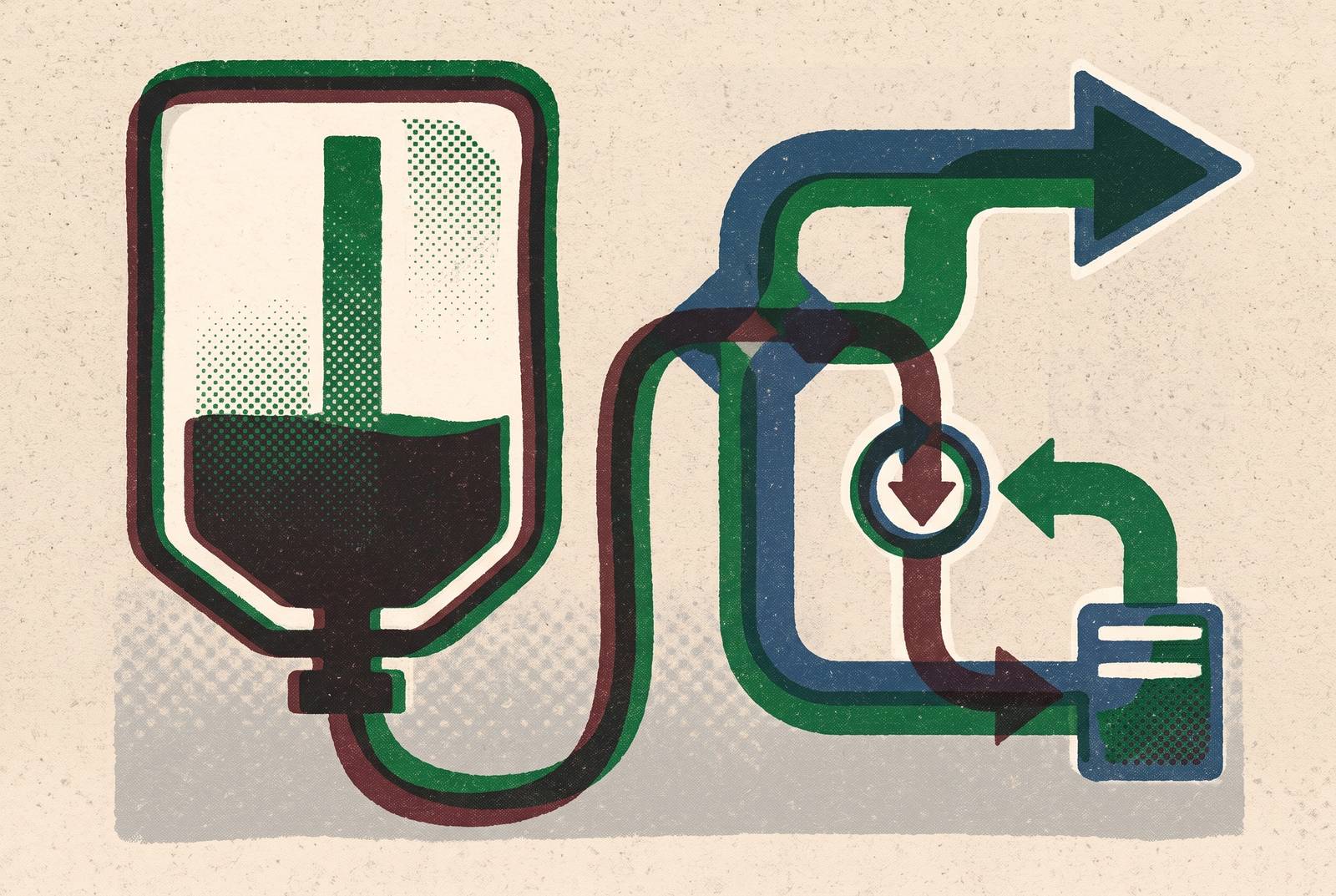
A claim denial for an infusion drug is rarely a billing mistake. It's the final, visible output of a process failure that happened weeks earlier, at scheduling, at intake, during prior authorization, or inside a clinical note that never made it into the chart the way the payer needed it to. This piece maps those upstream failures, payer by payer rule by rule, to the specific workflow fixes that stop them before a claim ever ships, and explains why generic, after-the-fact denial management can't keep up with how infusion billing actually breaks in 2026.
How infusion denials originate before a claim is written
A denial looks like a billing problem because that's where it shows up on paper. By the time a claim gets written, though, the conditions that caused the denial were usually locked in long before, back when the patient was first scheduled, when eligibility was checked (or not checked closely enough), when authorization was requested, or when the clinical note was written. The claim is just the last domino.
Infusion billing sits in a spot that ordinary medical billing doesn't. Drug administration has to be documented down to the minute. The authorization on file has to match the exact codes that end up on the claim. Medical necessity has to be argued in terms the payer's clinical reviewers will accept. None of that is optional in infusion work the way it sometimes is for a routine office visit.
The money at stake raises the pressure further. A single denied biologic claim can leave a practice holding the full cost of a drug it already bought and administered, with no reimbursement coming back. That's not a paperwork headache. If you take an upstream shortcut weeks before anyone files a claim, it will show up later as a dollar figure on an unpaid invoice.
How 2026 payer behavior has shortened the window for catching upstream errors
Payers are giving providers less time to fix denied claims, which changes the math on how infusion centers need to operate. UnitedHealthcare runs the shortest standard commercial appeal window among the major payers, shorter than what Aetna, BCBS, and Cigna currently allow. That gap matters because it compresses the margin for error on every claim tied to that payer.
The practical shift is simple to state and hard to ignore: an error that once had a two-week window for correction may now only have days. The only reliable fix left is removing the error before the claim goes out, not catching it faster after. Infusion billing's unique intersection of clinical and financial operations means that by the time a claim reaches the payer, most preventable denials have already been seeded upstream, a reality that platforms built specifically for infusion, like Ruby RCM, are designed to address by catching errors at scheduling, intake, and authorization rather than after submission. Appeal windows are now days, not weeks, so denial management can't carry the weight it used to once a claim is already submitted. Infusion centers need real-time checks on eligibility, authorization, and documentation before a claim is generated at all, which makes proactive verification at scheduling and intake the only dependable recovery strategy left.
Registration and Eligibility Errors at Scheduling
Registration and eligibility errors are some of the easiest denials to prevent, but they slip through constantly because staff treat front-desk verification as a quick formality, when it's actually a clinical prerequisite for safe, paid treatment. A policy that's inactive on the date of service, a name or date of birth that doesn't match what the payer has on file, missing subscriber details, outdated policy information: any one of these can sit quietly in a patient's record for weeks before it appears as a denial on a claim worth thousands of dollars.
You need to confirm coverage, eligibility, and benefits before every infusion appointment, not just the first one. That means checking that both the drug and the administration service are covered, and flagging any benefit limits before the patient ever sits down for treatment.
Infusion eligibility checks have to go further than a standard "active coverage" confirmation. Staff need to confirm that the specific drug, the specific dose, and the specific site of care are all covered under that plan, and they need to identify any prior authorization requirements tied to that combination. A plan can show active coverage in general, but it can still deny the exact drug and site combination you're billing.
The fix is a repeatable sequence: verify at scheduling, verify again before the appointment, and write down what was confirmed and when. That documentation does double duty. It prevents the error in the first place, and if a denial happens anyway, it becomes the evidence that supports an appeal. This is also the right moment to tell patients what they'll owe for anything not covered, so billing disputes don't pile up after treatment is already finished. Eligibility verification at scheduling and intake creates a control point where root-cause problems, inactive policies, mismatched demographics, missing prior auth requirements, can get caught and fixed before they turn into denials, especially when every verification step gets logged to build an audit trail that supports both prevention and appeals.
Prior authorization errors: where the revenue cycle most consistently collapses for recurring infusion patients
Prior authorization is the single biggest point of failure in infusion billing, and the place where a well-built treatment plan most often turns into a claim that never gets paid. Many infusion therapies can't legally start without a confirmed authorization on file. Treating a patient before that authorization comes through is close to a guarantee the claim won't be paid.
The failure modes are specific and recurring, not random. And any change in medication, dosage, frequency, or duration away from what was originally authorized can trigger a denial on its own.
Each of these failure types has a matching fix. Confirm PA requirements before the patient is scheduled. Start reauthorization well ahead of the expiration date on the current approval, not after it lapses. Submit the first request with everything the payer will ask for: treatment history, current labs, a medical necessity narrative, and provider notes on clinical progress. Track authorization status against the exact J-codes and CPT codes that will appear on the claim. Log every communication about that authorization: reference numbers, approval dates, approved units, and the exact codes the payer approved.
Infusion centers generally get one shot at getting it right. Intake has to capture every piece of required clinical information the first time.
Medical necessity documentation gaps: the clinical record as a billing prerequisite
A claim can clear prior authorization and still get denied, because the clinical documentation has to meet the payer's medical necessity standard once someone reviews it. In 2026, payers are looking for a specific set of documentation elements on infusion claims. They want a record of prior therapies the patient tried and why those therapies failed or couldn't continue. Payers want current lab values that show the treatment is still clinically needed, provider notes that track improvement or symptom change to justify continuing treatment, and a clear reason for any change in dose or frequency since the last authorization.
Some of the most common gaps are small things that slip past internal review but stop a payer cold: a missing physician signature on an order, an incomplete clinical history, or progress notes that never connect the patient's current status back to the treatment being billed. None of these are clinical quality problems. They're billing prerequisites that happen to live inside the clinical note. They have to be built into the documentation workflow itself, before a denial letter arrives.
You fix this with a documentation template built around the medical necessity criteria each major payer actually requires, paired with a pre-submission checklist that confirms every required element is there before you send the claim out. When a denial does cite a documentation gap, you need to send that specific reason back to the treating provider directly, so the same gap doesn't repeat on the next patient's chart.
J-code and CPT coding errors: how administration time and drug unit arithmetic introduce denial risk
Infusion coding errors follow patterns. They're tied to time-based CPT rules and J-code unit math, and once a practice sees the pattern, it can build checks that catch the error before submission rather than discovering it after a denial.
CPT codes for infusion services are built around time. Administration time has to be calculated correctly, and the line between an initial infusion code and a sequential one has to be drawn correctly. Get either wrong, and you get an automatic rejection, no appeal needed to see why.
Most infusion drugs bill under an HCPCS J-code, or a C-code in a hospital outpatient setting. You calculate drug units by dividing the administered dose by the J-code's unit size, and this simple arithmetic goes wrong constantly when a dose gets adjusted, a vial gets split, or rounding happens at the point of care.
Newly approved drugs without an assigned J-code create their own category of risk. Billing has to use an unlisted or NOC code, J3490, J3590, or J9999, until a permanent code comes through. These codes draw automatic scrutiny from payers, so you have to supply extensive supporting documentation. Smaller practices in particular feel the strain here: processing delays stretch out while the practice is still floating the cost of the drug it already bought and administered.
Mismatches between the authorization and the claim also occur at the coding level. If an authorization tied to one J-code maps to a slightly different code at billing, you get a denial even though the clinical intent never changed. Add in wrong modifiers, unbundling mistakes, diagnosis and procedure codes that don't line up, and missed modifiers for drug wastage or a discontinued infusion, and the list of predictable, preventable errors gets long fast.
The fix is a coding audit that happens before the claim is submitted. Claim scrubbers configured specifically for infusion coding rules catch a lot of this automatically. A reconciliation step that checks the codes on the claim against the codes referenced in the authorization catches the rest.
AR Aging and Denial Pattern Analysis for Root Causes
Even well-built upstream controls won't catch everything, so denial pattern analysis matters just as much as prevention does. Organizing denials by Claim Adjustment Reason Code (CARC) and Remittance Advice Remark Code (RARC), tracked against payer and claim type, turns raw denial data into something a team can actually act on. Without that structure, denial tracking just produces a count of how many claims got denied, not an understanding of why.
Payer-specific patterns disappear in aggregate reporting. A denial reason can look rare across all payers combined, but it can still be a consistent, systematic issue for one single payer. Without breaking the data out by payer, that pattern stays invisible, and the fix that would actually solve it never gets built.
AR aging analysis, sorted by payer class and aging bucket, flags claims approaching timely filing deadlines before they become unrecoverable write-offs. If a high-dollar infusion claim sits in an aging bucket closing in on a filing deadline, it needs to jump the queue, not wait its turn like every other claim.
The strongest infusion revenue cycle teams treat denials as patterns connected to specific operational causes. Leadership in those teams can explain why a denial happened, where in the process it started, and what change in the workflow stops it from happening again. That loop connects straight back to the upstream sections above: denial pattern analysis is what tells a team which front-end control actually failed, whether that's eligibility verification, prior authorization, documentation, or coding.
Underpayment detection belongs in this same analysis. Drug reimbursement under buy-and-bill moves with ASP updates and the specifics of each payer contract, so payment posting needs a step that verifies the amount a payer actually paid matches what the contract says it should pay. Practices that skip this step get underpaid in ways they never notice, claim after claim, because nothing in their workflow is built to catch it. A payer performance scorecard comparing expected reimbursement to actual reimbursement, payer by payer, reveals those underpayment patterns and any contract compliance gaps that denial tracking alone would miss.
Operating model principles for moving denial prevention upstream rather than downstream
Most infusion practices built their revenue cycle team to respond to denials, not to prevent them. That structural choice has a cost built into it: the practice pays once for the prevention work it skipped at scheduling, intake, authorization, and documentation, and pays again for the recovery work it now has to do after the fact, appealing claims, chasing payers, rewriting documentation after the denial letter arrives instead of before the claim went out.
If you move prevention upstream, you restructure around the sections above instead of treating them as a checklist to run once. Eligibility verification at scheduling and before the appointment. Prior authorization tracked against exact billing codes, not drug names. You build documentation to payer-specific medical necessity criteria before you draft the claim. Coding audits run before submission. Denial pattern analysis by CARC and RARC feeding fixes back into each of those upstream steps.
Infusion centers evaluating how to structure this work, whether building it internally or choosing a partner built specifically for infusion billing, should judge any option against the same standard: does it catch errors at the point they're created, or does it only get faster at cleaning them up after a payer has already said no. That's the dividing line between an operation still fighting denials one at a time and one that has stopped generating most of them.